
ACCESS aUDITS
Creating Accessible and Inclusive Environments
Is Your Building Truly Accessible?
When was the last time you looked at your building through the eyes of somebody with specific access requirements?
Many organisations assume their premises are accessible because they have installed a ramp, designated accessible parking spaces or an accessible toilet. While these are important features, true accessibility is about far more than individual adaptations. It is about ensuring people can enter, navigate and use your building safely, comfortably and independently.
At FMS, we provide professional Access Audits to help organisations identify barriers, improve accessibility and create more inclusive environments. We assess how your premises perform in practice and provide clear, practical recommendations to support future improvements.
Whether you manage an office, educational facility, healthcare setting, industrial site, commercial property or public-facing building, an Access Audit provides valuable insight into how your premises are experienced by employees, visitors, customers and contractors.
Organisations often choose to undertake an Access Audit when planning refurbishment works, relocating to new premises, renewing a lease, responding to workplace changes or simply wanting to ensure their building provides a welcoming environment for everyone. Whatever the reason, understanding how people experience your premises is the first step towards creating a more accessible and inclusive environment.
Why Accessibility Matters
An inaccessible environment can create challenges that are not always obvious to those who use a building every day.
Something as simple as poor signage, heavy doors, inadequate lighting or confusing layouts can make a building difficult to navigate for people with mobility, visual, hearing or other access needs. These barriers can affect the experience of employees, customers, visitors and members of the public alike.
Creating a more accessible environment demonstrates your commitment to inclusion whilst improving the overall experience for everyone who uses your building. It can also help organisations attract and retain talented employees, enhance customer satisfaction and create workplaces that reflect modern expectations of accessibility and equality.
Most importantly, accessibility should never be viewed as a one-off project. As buildings evolve, workforces change and legislation develops, it is important to regularly review how effectively your premises support the people who use them.
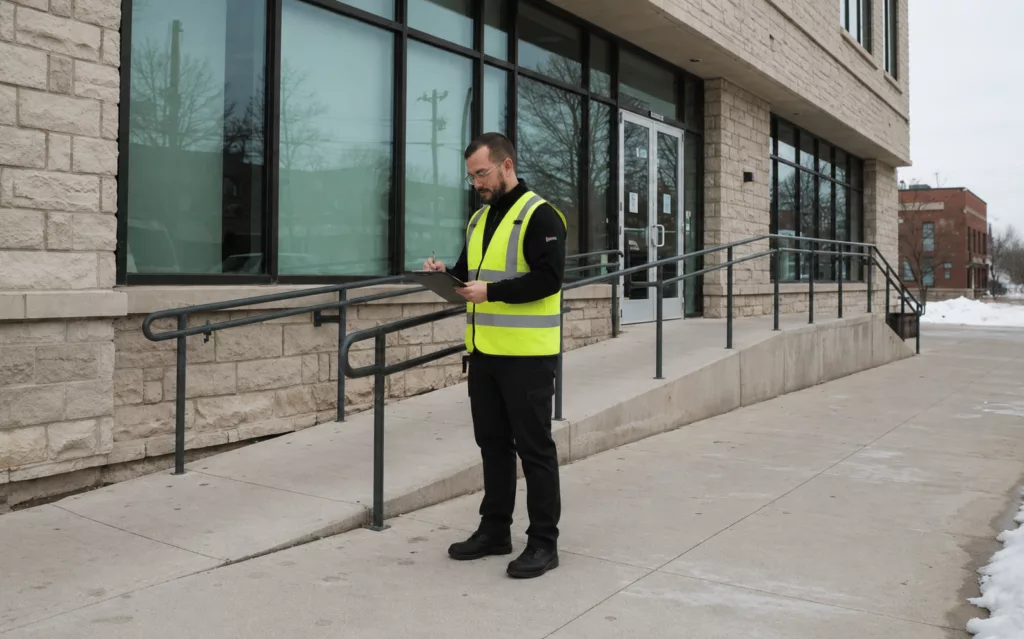
Understanding the User Journey
An Access Audit considers the complete journey through your building rather than assessing individual features in isolation.
From the moment somebody arrives on site until the point they leave, the audit examines how accessible your premises are in practice, identifying physical, operational and environmental barriers that may impact people’s ability to move around safely and independently.
Depending on the type and use of your premises, the assessment may include:
- Approach routes and accessible parking
- Circulation around the site
- Building entrances
- Reception and waiting areas
- Corridors and circulation spaces
- Internal doors
- Lifts and stairways where applicable
- Accessible toilets and changing facilities
- Meeting, training and seminar rooms
- Dining facilities and kitchens
- Offices
- Warehouse and production areas
- Lighting
- Acoustics
- Wayfinding and signage
- Colour and visual contrast
- Fixtures and fittings
- Staff training
- Means of escape for disabled people
Rather than simply ticking boxes, the audit looks at how these elements work together to create an environment that is welcoming, practical and accessible for everyone. It can also consider staff training and operational procedures where these form part of the overall accessibility experience.
Professional Assessments with Practical Recommendations
An Access Audit is designed to do much more than identify potential issues.
FMS provides professional assessments that result in practical, achievable recommendations tailored to your premises.
Following the audit, you will receive a comprehensive report detailing observations, identified barriers and prioritised recommendations for improvement. This provides a clear roadmap for future investment, allowing organisations to understand where improvements are likely to have the greatest impact.
Often, relatively small changes can make a significant difference to accessibility and user experience. By identifying opportunities early, organisations can plan improvements strategically rather than reacting when problems arise.
Supporting Equality and Best Practice
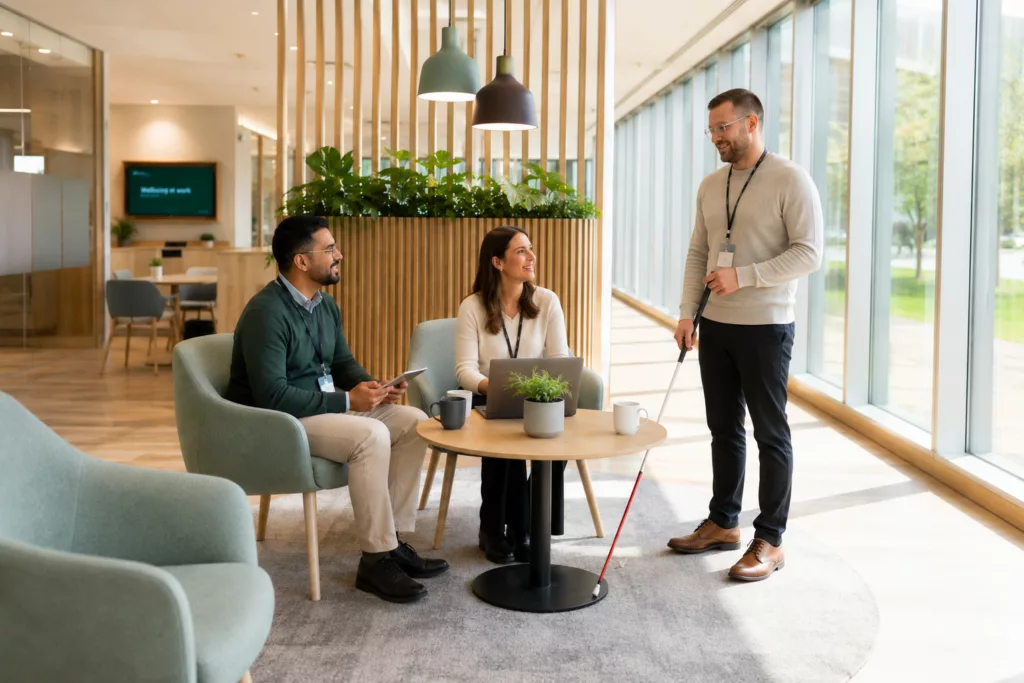
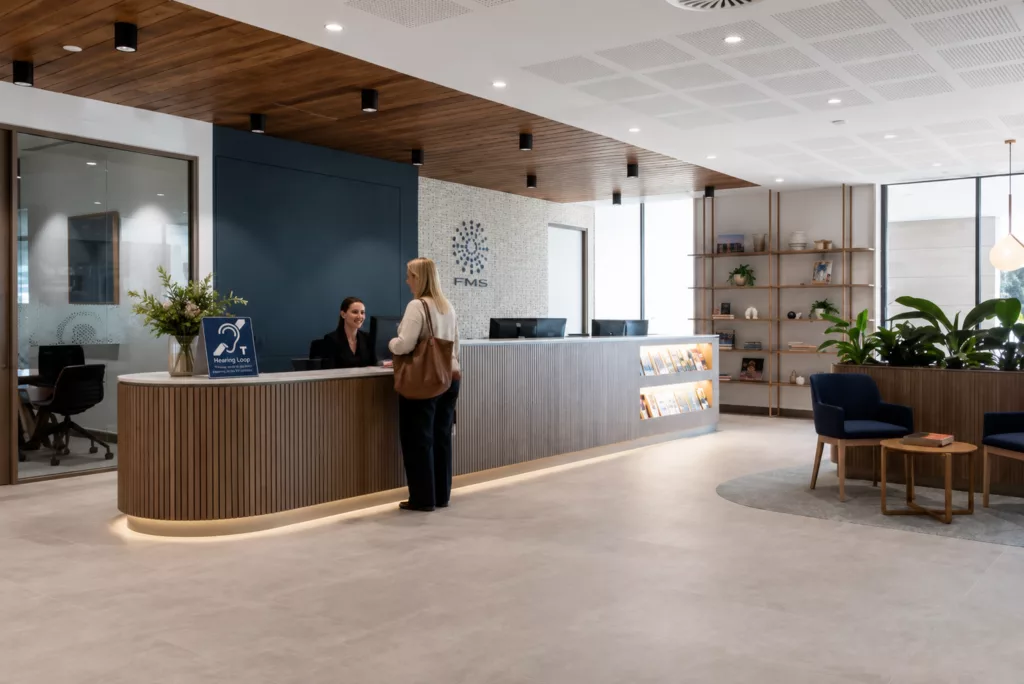
Creating accessible environments is about more than compliance. It is about ensuring everyone can use your facilities with confidence, dignity and independence.
Our Access Audits help organisations understand what improvements may be considered reasonable under the Equality Act 2010, identifying barriers and providing practical recommendations to support more inclusive environments.
Rather than relying on assumptions, the audit provides an evidence-based assessment of your premises, helping you make informed decisions about accessibility improvements and future investment.
Taking a proactive approach not only helps improve the experience of employees, visitors and customers, but also demonstrates a genuine commitment to equality, inclusion and best practice.
Inclusive Design Audits
Accessibility extends beyond physical disability.
FMS can also provide Inclusive Design Audits, expanding the scope of the assessment to consider other protected characteristics recognised under the Equality Act 2010.
This broader approach considers how buildings and facilities are experienced by a diverse range of users, helping organisations create environments that are welcoming, inclusive and practical for everyone.
By taking a wider view of accessibility and inclusion, organisations can better understand how their buildings support the needs of employees, visitors and customers from different backgrounds and with varying requirements.
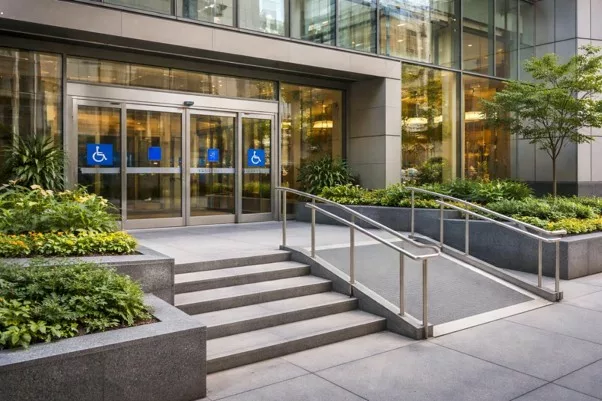

From Assessment to Action
One of the advantages of working with FMS is that our support does not end when the audit is complete.
Once recommendations have been identified, our facilities management team can help coordinate and manage many of the improvements required, providing a practical route from assessment through to implementation.
Whether recommendations involve alterations to the building, improvements to signage, lighting upgrades, accessibility enhancements or wider facilities management services, we can help ensure the recommendations are translated into meaningful action.
By combining specialist access expertise with practical facilities management experience, FMS not only helps identify improvements but can also help coordinate their implementation, giving you a single point of contact from assessment through to completion.
Who Can Benefit from an Access Audit?
Access Audits are suitable for organisations responsible for workplaces, commercial buildings and public-facing environments.
They are particularly valuable for:

Offices and corporate buildings

Schools, colleges and universities

Healthcare facilities

Retail and leisure premises

Warehouses and industrial sites

Manufacturing environments

Public sector buildings

Multi-occupancy premises
Creating an accessible building isn’t simply about removing barriers, it’s about creating an environment where everyone can work, visit and interact with confidence.
Buildings that are easier to navigate, better signed, well lit and thoughtfully designed create a better experience for employees, customers, visitors and contractors alike.
By identifying barriers that may otherwise go unnoticed, an Access Audit helps organisations create safer, more welcoming and more inclusive environments whilst supporting long-term planning and continual improvement.
Small changes often have a significant impact, and understanding where those improvements should be made is the first step towards creating buildings that truly work for everyone.

Access Audits Across Milton Keynes and Surrounding Areas
FMS is based in Milton Keynes and provides professional Access Audits for organisations across the surrounding region.
We work with businesses, schools, healthcare providers, commercial property managers, industrial sites and public-facing organisations throughout Milton Keynes, Aylesbury, Luton, Northampton, Oxford, Bedford and Buckingham, as well as the surrounding towns and areas.
Whether you manage a single building or multiple premises across the region, our team can assess how accessible your facilities are in practice, identify potential barriers and provide clear, prioritised recommendations for improvement.
If you are unsure whether we cover your location, please get in touch. Our team will be happy to discuss your premises, your requirements and how an Access Audit could help you create a more accessible and inclusive environment.
Frequently Asked Questions
What is an Access Audit?
What is the difference between an Access Audit and an Inclusive Design Audit?
Are Access Audits only about wheelchair users?
What areas of a building are assessed?
Is an Access Audit a legal requirement?
Will I receive a written report?
Can FMS help implement the recommendations?
How long does an Access Audit take?
Can an Access Audit be carried out on an existing building?
What happens after the audit?
CONTACT
PHONE
01908 034 040
EMAIL
[email protected]
HEAD OFFICE ADDRESS
Unit 1, Newton Court,
37 Kelvin Drive,
Knowlhill,
Milton Keynes, MK5 8NH