

As 2025 draws to a close, many organisations are already looking at the year ahead and for operations and facilities managers, that means only one thing: CAPEX planning.
Capital Expenditure (CAPEX) is more than just ticking compliance boxes or refreshing old equipment. It’s an essential strategic tool that keeps buildings safe, efficient and operationally reliable. With ageing assets, rising maintenance costs and growing compliance expectations, proactive planning is now essential for controlling risk and protecting budgets.
Whether you manage an office, warehouse, industrial plant or multi-site estate, now is the perfect time to start planning.
What Counts as CAPEX in Facilities Management?
Capital projects are long-term investments that improve, upgrade or replace major systems and assets. For FMS clients, this often includes:

Building Fabric & Structural Elements
- Roofing replacement or repairs
- Industrial cladding upgrades
- Building insulation improvements
- Car-park resurfacing
Sustainability & Energy-Efficiency Projects
- Solar canopy systems
- EV charging infrastructure
- LED lighting conversions
- Insulation upgrades
- Energy-efficient HVAC improvements
- Building fabric improvements for heat retention
- BMS upgrades for automated energy control
- Solar PV
- Battery storage
- Heat pumps (where appropriate)
Mechanical Systems
- Boiler and heating system upgrades
- Replacement of ageing pipework
- Hot-water system replacements
- Drainage infrastructure improvements
HVAC & Ventilation
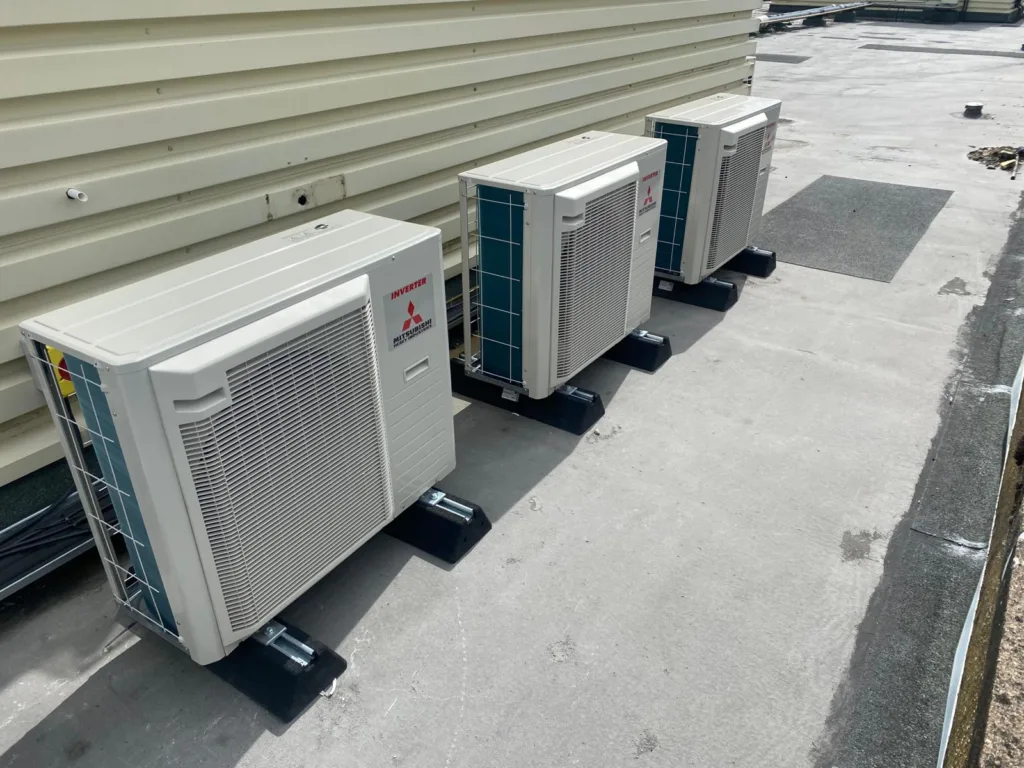
- Air-conditioning unit replacement
- Air-handling unit (AHU) upgrades
- Ducting repairs and replacements
- Ventilation system improvements for air quality
- Heat recovery systems (MVHR / HRUs)
Electrical & Power Infrastructure
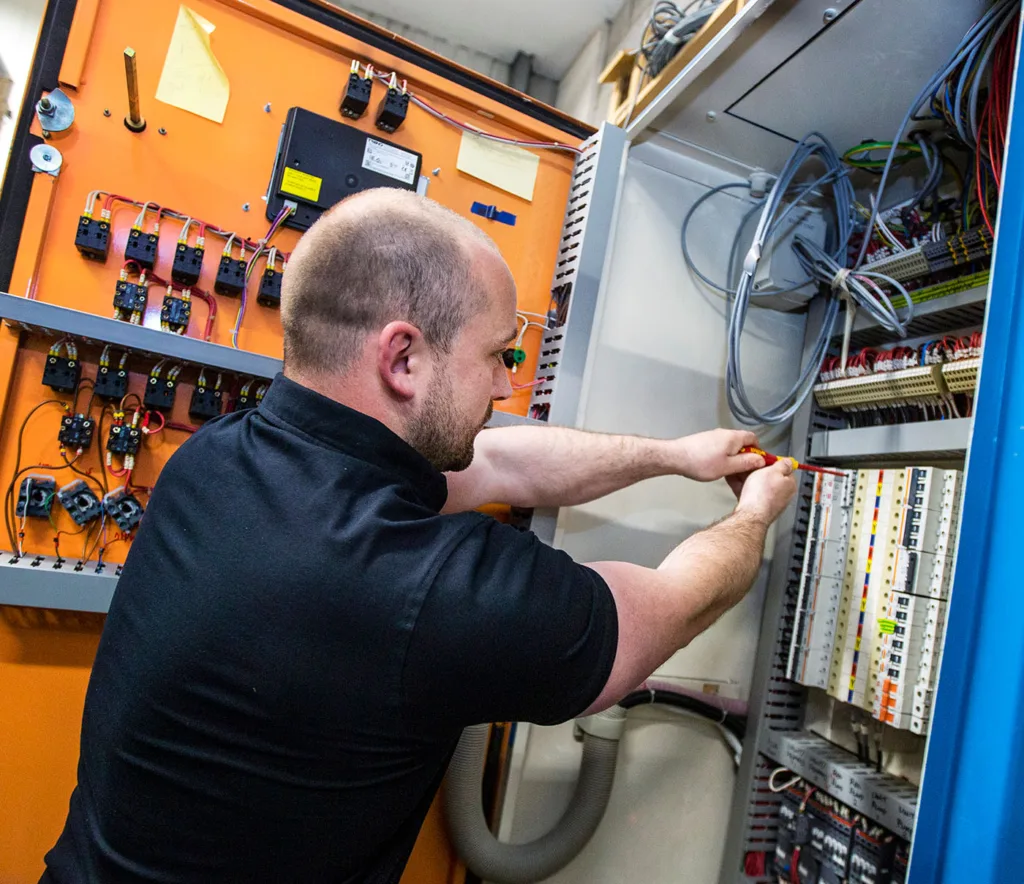
- Electrical panel upgrades
- Rewiring and distribution improvements
- LED lighting projects
- External lighting systems
- Backup generators
- UPS systems
- Power factor correction
Fire, Security & Access Systems
- CCTV installations
- Automated gate & barrier systems
- Access control upgrades
- Fire alarm & emergency lighting upgrades
Warehouse & Operational Spaces
- Racking installations or expansions
- Mezzanine floor projects
- Safety systems upgrades
- Loading bay improvements
- High-speed doors
- Dock leveller replacement
Technology & Controls
- Building management system (BMS) upgrades
- Smart monitoring & sensor installation
- Energy-efficiency technologies
- Energy monitoring systems
- IoT building sensors
- Smart thermostatic systems


Office / Interior / Fit-Out
- Partitions
- Flooring
- Refurbishments
- WC refurbishments
- Kitchen refurbishments
- Welfare area upgrades
- Accessibility improvements (ramps, lifts)
Regulatory / Compliance CAPEX
- Fire compartmentation works
- Asbestos removal
- Water storage upgrades (Legionella compliance)
- F-gas compliance equipment
- Electrical compliance upgrades
If an asset will last more than a year and improves the building’s function, value or safety, it likely qualifies as CAPEX.
Asset Lifecycles & Replacement Thresholds
Asset Lifecycles
Understanding asset condition and expected lifespan is also key to planning CAPEX effectively. Lifecycle data is one of the strongest indicators for CAPEX prioritisation. Boilers (10–15 years), HVAC units (10–12 years), AHUs (15–20 years), roofing systems (20–25 years) and electrical panels (25–30 years) all follow predictable replacement cycles. Once assets reach these thresholds, the risk of failures and spiralling repair costs increases sharply.
Why CAPEX Is More Cost-Effective Than Reactive Maintenance
A common misconception is that delayed investment saves money. In reality, the opposite is true. As an example, an emergency boiler replacement can cost 30–40% more than a planned upgrade due to rapid procurement, premium labour rates and temporary heating arrangements. Similarly, reactive roof repairs after a failure often cost several times more than proactive refurbishment because of water damage, disruption and emergency call-out charges.
Reactive spend is unpredictable, disruptive and more expensive.
Examples:
- Emergency boiler replacements cost significantly more than planned upgrades.
- Reactive roof repairs often escalate into major water damage.
- Old HVAC systems consume far more energy than new equivalents.
A planned CAPEX strategy:
- Extends asset life
- Reduces operational downtime
- Cuts emergency call-out costs
- Improves energy efficiency
- Ensures compliance and insurance protection
Whole Life Costing
CAPEX decisions should always be evaluated through whole-life costing, not just upfront spend. A modern HVAC system, for example, may cost more initially but deliver significantly lower energy usage, reduced repair demand and improved reliability over its 10–15 year lifespan. Factoring in maintenance, energy consumption and downtime risk often shows that newer, more efficient assets provide far better long-term value than repeatedly repairing ageing equipment.
The Risks of Delaying CAPEX
Delaying investment may feel easier, but it puts your building at risk.
1. Rising Material and Labour Costs
Construction material prices and skilled labour shortages mean projects become more expensive the longer they are postponed.
2. Long Lead Times for Key Assets
Lead times for key building assets have increased across the industry. Boilers, AHUs, switchgear, generators, cladding panels and roofing materials can all carry lead times of 8–30+ weeks depending on specification. Planning CAPEX early ensures materials, engineers and equipment are secured well in advance, avoiding last-minute delays, seasonal pressures and reactive premium costs.
3. Greater System Failure Risk in Winter
Older boilers, HVAC systems and roofing struggle during cold weather when demand is highest.
4. Increased Compliance Risk
Areas such as:
- F-gas
- Fire safety
- Water hygiene
- Electrical safety
…have strict standards — outdated systems may no longer comply.
5. Insurance Issues
Insurers may refuse cover or raise premiums if essential building systems are past end-of-life.
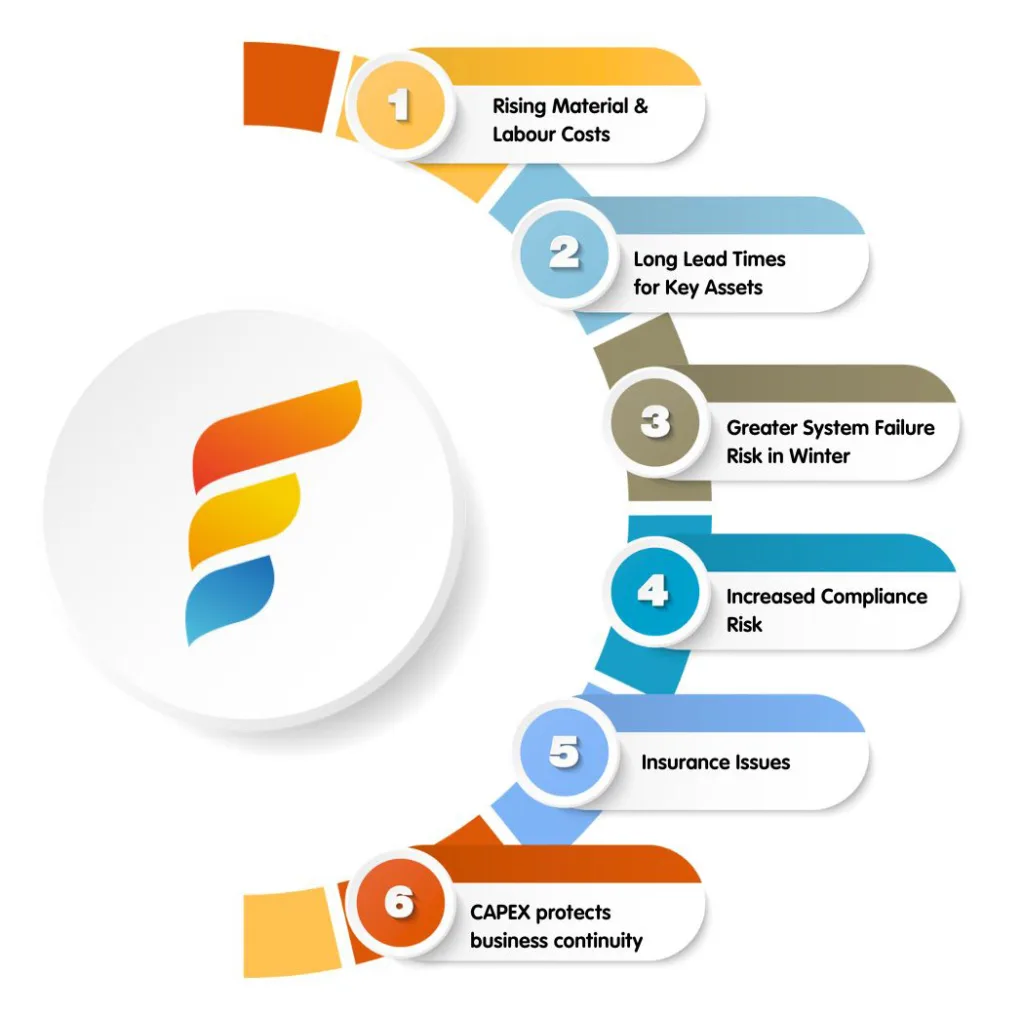
6. CAPEX projects play a crucial role in protecting business continuity.
For warehouses, production sites and mission-critical environments, asset failure can halt operations entirely. Investing in reliable heating, cooling, drainage, electrical distribution and building fabric reduces the risk of shutdowns, protects temperature-sensitive stock, maintains staff comfort and keeps workflows uninterrupted throughout the year.
Compliance-Based CAPEX Drivers
Beyond the operational and financial risks, compliance itself is increasingly driving CAPEX decisions. In many cases, compliance requirements themselves trigger necessary CAPEX investment. Changes in fire compartmentation guidance, electrical standards, water hygiene controls, F-gas regulations or accessibility requirements may require upgrades to buildings and systems. Proactive planning ensures compliance gaps are addressed before they become issues or attract regulatory attention.
How CAPEX Supports Long-Term Business Goals
CAPEX investment isn’t just about replacing old assets, it’s about enabling growth and operational stability.
Improved energy efficiency
Reduced carbon footprint/lower energy bills
Safer working environments
Stronger operational uptime
Predictable budgeting
Enhanced employee comfort & productivity
Improved customer impressions
Long-term cost savings
Investment today enables operational resilience tomorrow.
The FMS Approach to CAPEX Planning
FMS offer a structured, end-to-end CAPEX planning and delivery service:
1. Full Site Survey & Asset Review
We assess the condition, age and performance of your building systems.
2. End-of-Life Forecasting
We help you understand what needs replacing now, next year, or within 3–5 years.
3. Costed Project Recommendations
Clear, board-ready proposals that help you justify investment.
4. Phased Project Scheduling
Minimising disruption by planning around shutdowns, operations and seasons.
5. Tendering & Contractor Management
Tendering and contractor management are also key parts of successful CAPEX delivery. FMS can manage the full process, from writing technical specifications and obtaining competitive quotes to coordinating contractors and ensuring works comply with CDM regulations. This gives clients complete transparency, better value and confidence that projects will be delivered safely, compliantly and to the correct standard.
6. Complete Project Delivery
Our qualified engineers manage installation, commissioning and handover.
7. Post-Project Maintenance & Support
Ensuring assets remain efficient and compliant for years to come.
With FMS, organisations get a single, reliable partner for survey → planning → delivery → maintenance.
Your 2026 CAPEX Planning Checklist
- Identify assets 10+ years old
- Review compliance reports (fire, water, electrical, HVAC)
- Check energy usage & inefficiencies
- Create a risk-based asset priority list
- Commission a condition survey if not updated this year
- Get costed options for replacements or upgrades
- Build a 1–5 year phased CAPEX plan
- Present for January–April budget cycles
Start Planning Your 2026 CAPEX Projects Now
CAPEX decisions made over the next few months will define the stability and efficiency of your building for years to come.
FMS support clients across Milton Keynes and the surrounding areas with full-service CAPEX planning, costed project proposals and complete delivery.
If you’re preparing budgets for 2026, now is the perfect time to start.
Contact FMS today to book your CAPEX site survey or project planning session. Email us on [email protected] or call us on 01908 034040.