
The Risks Many Businesses Underestimate
Legionella risk is a key responsibility for those managing buildings, particularly where water systems are used daily by staff, visitors or residents.
Under guidance from the Health and Safety Executive, duty holders are required to assess and control the risk of legionella within water systems.
In workplaces and commercial environments, this responsibility often sits with employers, landlords, facilities managers or those responsible for building maintenance and water hygiene management.
However, from what we regularly see on site, the risk is often underestimated. Not because systems are intentionally ignored, but because they are assumed to already be under control.
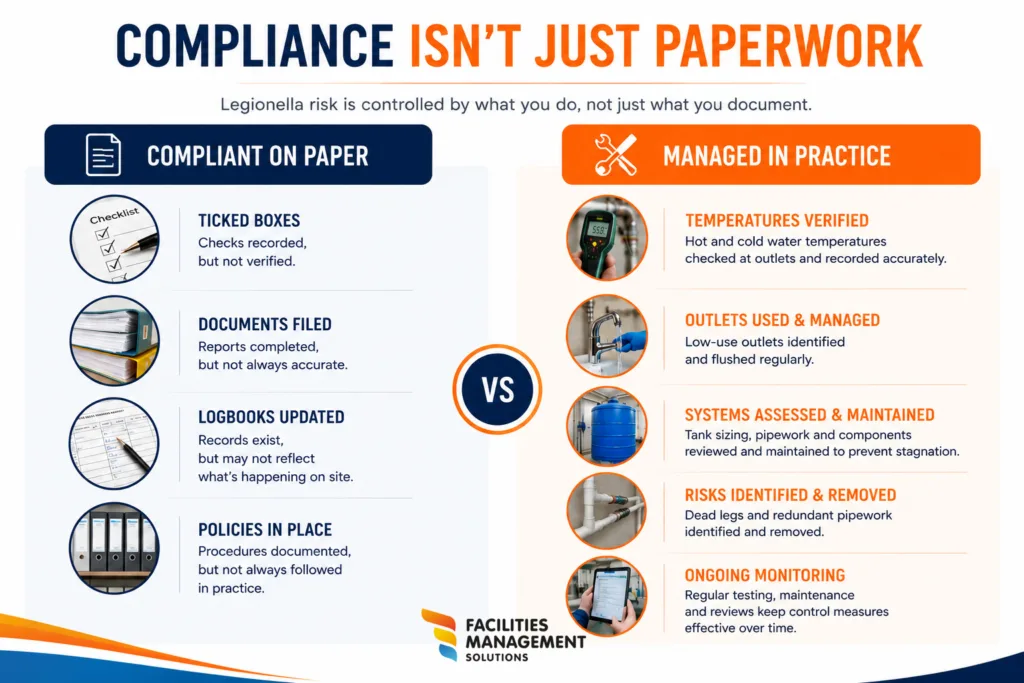
In many cases, documentation exists, but the day-to-day management of the system does not always reflect what is happening in practice.
A system can appear compliant on paper whilst still developing conditions where risk can increase unnoticed.
What Is Legionella?
Legionella bacteria can develop in man-made water systems where conditions allow water to stagnate and temperatures support bacterial growth.
If contaminated water droplets become airborne and are inhaled, this can lead to Legionnaires’ disease, a potentially serious form of pneumonia.
Water systems that are poorly managed, incorrectly maintained or subject to stagnation can create conditions where the risk increases over time.
What We’re Seeing On Site
Across commercial buildings, facilities and occupied properties, some of the most common issues we encounter include:
- Temperature checks being recorded, but not consistently verified
- Oversized water storage resulting in stagnation and bacterial growth
- Little-used outlets being overlooked or incorrectly managed
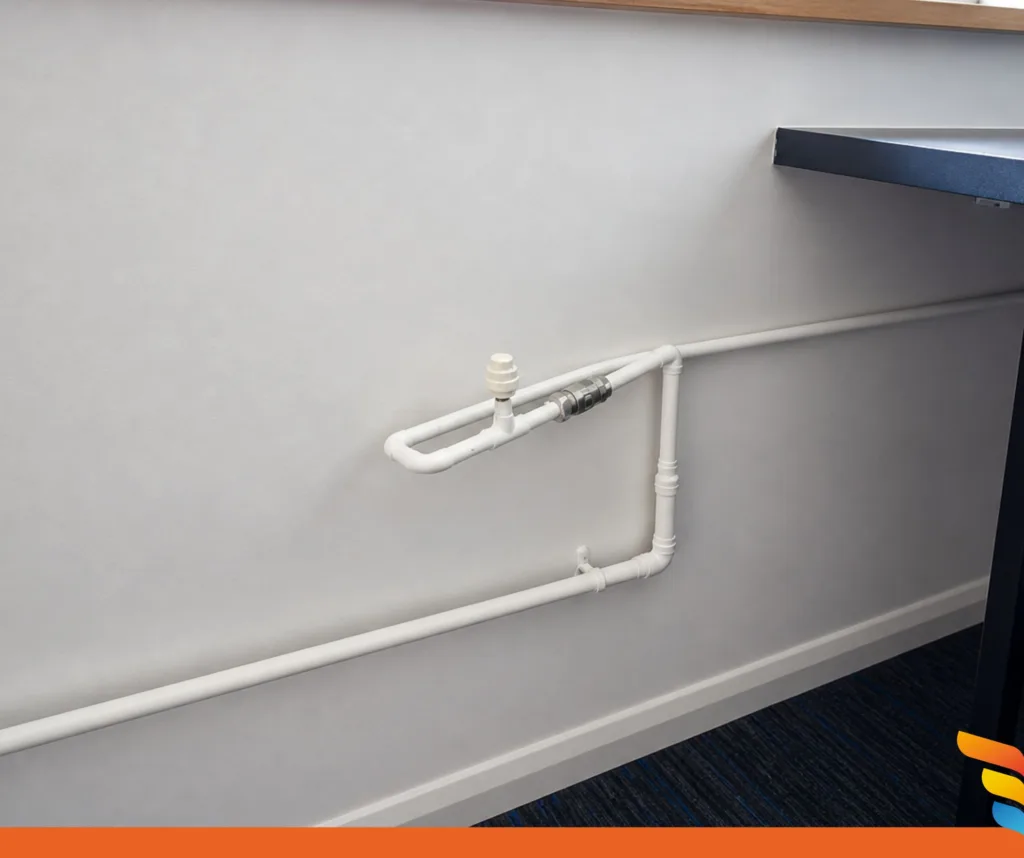
- Dead legs, unused or capped sections of pipework where water can stagnate
- Water storage tanks, cylinders or pipework exposed to fluctuating environmental conditions
- Systems modified over time without reassessment
- Incomplete or inconsistent logbooks
- Responsibility for monitoring not being clearly defined
One of the biggest concerns we regularly identify is this:
The system appears compliant on paper, but not necessarily in practice.
Why Legionella Risk Develops Gradually
A common misconception is that legionella risk develops because of one major failure.
In reality, the risk often builds slowly over time through a series of smaller gaps in management and maintenance.
These can include:
- Monitoring checks being missed or rushed
- Records completed without proper verification
- Changes to systems not being reassessed
- Poor communication around responsibilities
- Water usage patterns changing without controls adapting alongside them
Individually, these issues may seem minor. Together, they can create conditions where stagnation, poor temperature control or bacterial growth become more likely.
This is why ongoing monitoring and practical management are just as important as the original risk assessment itself.
How Changing Building Usage Creates Risk
Many buildings no longer operate in the same way they were originally designed for.
Hybrid working, reduced occupancy, unused office areas and changing tenancy arrangements can all affect water usage patterns across a building.
Systems that previously operated safely may begin developing stagnation risks if water demand reduces without the system being reassessed.
This is one of the reasons regular review and practical oversight remain so important, particularly in buildings that have evolved over time.
Practical Checks You Can Carry Out
There are several practical areas building managers and duty holders can review to help determine whether systems are being managed effectively.
Temperature Control
Hot water should typically be stored above 60°C and distributed at 50°C or above. Cold water should generally remain below 20°C.
However, it is not enough for temperatures to be recorded centrally. The important factor is whether these temperatures are consistently achieved throughout the system and at outlets themselves.
Temperature inconsistencies can often indicate wider system management issues.
Outlet Usage
Low-use outlets are one of the most common risk areas within water systems.
Where outlets are rarely used, water can stagnate within the pipework, increasing the conditions in which legionella bacteria may develop.
Regular flushing programmes are particularly important where building occupancy changes over time or certain areas become underused.
Water Storage Sizing
As buildings evolve, cold water storage tanks are often left oversized for current usage requirements.
Oversized tanks can increase water age and stagnation risk.
One simple way to sense-check this is through a drop test. This involves isolating the tank and monitoring how much the water level changes through normal daily usage.
- Very little change in water level may indicate oversized storage
- Significant usage without depletion can suggest sizing is more appropriate
Where there is uncertainty, specialist assessment is recommended to ensure the system remains safe and suitable for current demand.
Dead Legs & Redundant Pipework
Unused sections of pipework are frequently missed during routine inspections.
These areas can allow water to stagnate for prolonged periods and should be identified, assessed and removed where appropriate.
This is particularly common in buildings where systems have been altered or extended over time.
Records & Logbooks
Accurate record keeping remains a key part of legionella management.
However, records should reflect genuine activity and verification, not simply become a paperwork exercise.
Monitoring logs, flushing records and temperature checks should all align with what is physically happening on site.
System Awareness
One of the most overlooked factors in legionella management is understanding.
Those responsible for monitoring systems should understand not only what tasks are required, but why they matter.
This is often where procedures begin to break down over time.
A Legionella Risk Assessment Is Only The Starting Point
A common assumption is that once a legionella risk assessment has been completed, the risk is fully controlled.
The assessment is only the beginning.
Without ongoing testing, monitoring, maintenance and periodic review, control measures can quickly become ineffective, particularly as buildings, occupancy levels and water usage patterns change over time.
Effective legionella management requires systems to be actively maintained and regularly reviewed in practice, not simply documented once and forgotten.
When Specialist Input Is Important
While some routine monitoring tasks can be carried out internally, risk assessments and system reviews should always be undertaken by a suitably qualified and competent water hygiene professional.
This becomes particularly important where:
- Water systems have been altered
- Documentation is incomplete
- Building usage has changed
- There is uncertainty around compliance
- Existing controls may no longer reflect current conditions
An experienced external review can often identify practical risks that are easily missed during routine internal management.
Frequently Asked Questions
What causes legionella in water systems?
Legionella bacteria can develop where water stagnates and temperatures allow bacterial growth. Poor circulation, low-use outlets, oversized storage tanks and unmanaged pipework can all contribute to increased risk.
What temperature kills legionella bacteria?
Hot water should typically be stored above 60°C, with distribution temperatures reaching at least 50°C at outlets. Cold water should generally remain below 20°C to help reduce bacterial growth risk.
What is a dead leg in pipework?
A dead leg is an unused or redundant section of pipework where water can sit stagnant for prolonged periods. These areas can increase the risk of bacterial growth if not properly removed or managed.
How often should legionella risk assessments be reviewed?
Risk assessments should be reviewed regularly and whenever there are significant changes to a building, water system or occupancy patterns. Systems should also be reassessed if concerns arise regarding monitoring or compliance.
Who is responsible for legionella compliance?
Responsibility typically sits with employers, landlords, facilities managers or those responsible for building maintenance and water hygiene management within a property.
How Facilities Management Solutions Can Help
Facilities Management Solutions supports clients with:
- Legionella risk assessments
- Water system testing and monitoring
- Compliance support
- Ongoing maintenance management
- Practical site-based reviews
Our approach focuses on how systems are operating day-to-day, not simply how they appear within documentation.
By reviewing systems in practice, we help clients identify potential gaps before they become larger compliance or safety concerns.
If you would like a clearer understanding of how your water systems are being managed, our team can carry out a practical site-based review and highlight any areas that may require attention.
We are always happy to provide straightforward, no-obligation advice and guidance.
To get in touch, simply drop an e-mail to [email protected] or call us on 01908 034040.